Picture this: you find the perfect gulf‑view condo in Panama City Beach, but your lender says the building is “non‑warrantable.” It sounds like a deal breaker, and it can be if you do not know your options. You want clarity, a plan, and a path to close without surprises.
In this guide, you will learn what non‑warrantable means, why many Panama City Beach condos land in that category, how to check a building’s status, and which financing options can still work. You will also see typical down‑payment ranges, the documents to collect early, and a simple workflow to keep your purchase on track. Let’s dive in.
What “non‑warrantable” means
“Warrantable” is a mortgage industry term. A condo project is warrantable when it meets the condo project rules used by Fannie Mae, Freddie Mac, FHA, and VA. If a project meets those rules, many standard loan programs are available. If it does not, the building is “non‑warrantable,” and your financing choices narrow.
Lenders look at the building and association, not just your unit. Typical review items include owner‑occupancy rates, investor concentration, single‑entity ownership, commercial or hotel use, HOA budget and reserves, insurance coverage, litigation, and project completion status. You can see the broad framework in the Fannie Mae project eligibility guidance and Freddie Mac project review rules. FHA and VA have their own processes and lists as well. For government loans, start with FHA condo and Single‑Unit Approval resources and the VA home loan overview.
Why PCB condos are often non‑warrantable
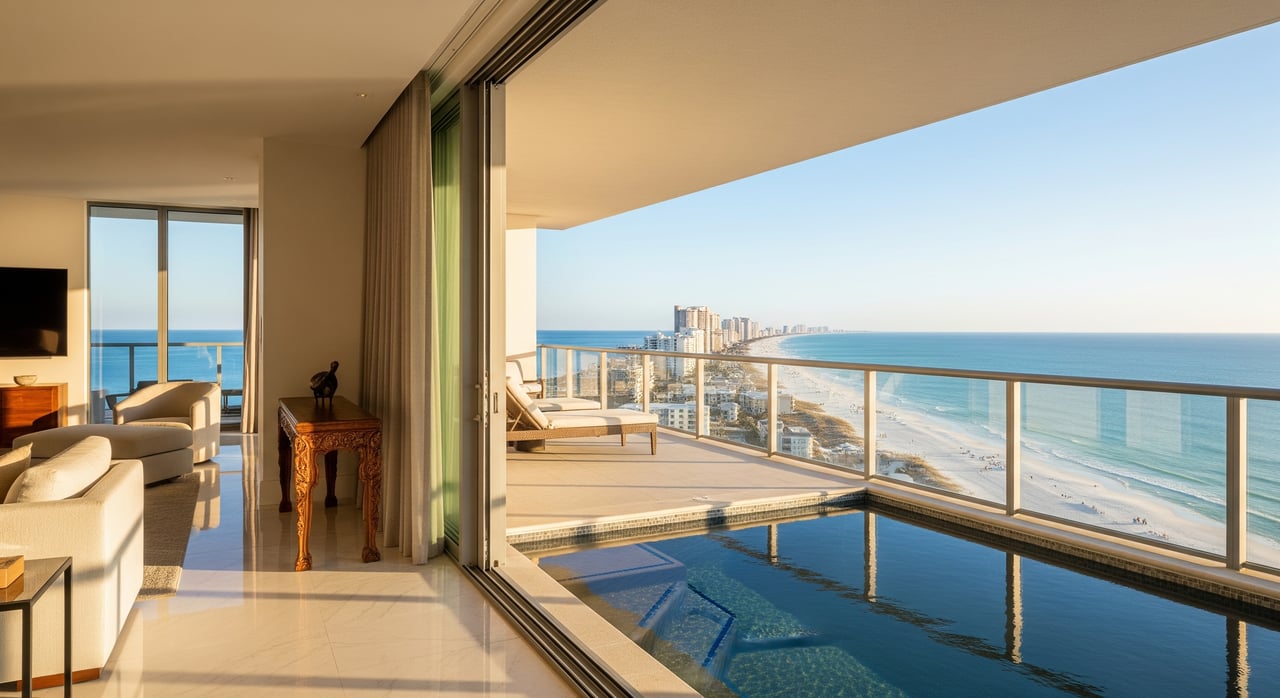
Panama City Beach is a vacation hub. Many buildings allow short‑term rentals, and investor use can be high. That can look to lenders like hotel‑style activity or heavy investor concentration.
Coastal insurance adds another layer. Florida wind and hurricane risk can push premiums up. If an association lacks strong coverage or carries very high deductibles, lenders may decline the project. Post‑storm repairs, structural updates, and special assessments can also spur litigation, which is an immediate red flag for many programs.
Other common triggers include developer or investor groups owning many units, newly renovated or phased projects without complete reserve studies, and very small associations. Each of these can limit access to standard conforming, FHA, or VA loans.
How to check a building early
You can reduce surprises by checking the building before you write an offer. Here is a simple approach:
- Search the FHA condo approval/SUA resources and the VA home loan site for approval information.
- Ask the HOA or manager for a project eligibility or representation letter. Confirm owner‑occupancy percentage, number of units, special assessments, reserve balance, insurance, and any litigation.
- Request the HOA packet: budget, reserve study, insurance declarations, bylaws, rules, meeting minutes, and rental policies.
- Share those documents with your lender. Some lenders will run a project review or consider a single‑unit approval when allowed.
- Work with a local condo‑experienced agent. In PCB, managers and agents often know which buildings are easy or hard to finance.
Financing options that work
Exact loan terms depend on your credit, income, down payment, and the specific reason a project is non‑warrantable. Use these paths as a starting point, then talk to multiple lenders that handle non‑warrantable condos.
FHA and VA
FHA
- If the project is FHA‑approved, you may qualify with as little as 3.5% down. FHA also allows many lenders to use Single‑Unit Approval in otherwise unapproved projects. Review the FHA condo and SUA guidance for the big picture.
- Pros: Lower down payment possible and flexible credit in some cases.
- Cons: If the project is not approved and the lender will not pursue SUA, FHA may not be an option.
VA
- VA loans typically require project approval. If the project is approved, eligible veterans may qualify for 0% down. Start with the VA loan overview.
- Pros: High leverage and favorable terms for eligible buyers.
- Cons: Approval can be strict, and many lenders avoid non‑approved projects.
Conventional conforming
- If the building is warrantable under Fannie Mae or Freddie Mac rules, standard conforming loans are available, sometimes with 3–5% down for primary homes.
- If the project is non‑warrantable, these loans are typically unavailable unless a lender can clear a project review or exception.
Portfolio loans from local banks and credit unions
- These loans stay on the lender’s balance sheet, so underwriting is more flexible. Many Florida community banks and credit unions offer condo‑friendly portfolio options.
- Typical expectations:
- Down payment: 20–30% for many primary homebuyers. Very strong profiles sometimes see 10–15%, but this varies.
- Rates: Often higher than conforming, but competitive. Terms depend on the project and your profile.
- Pros: Flexibility and local decision makers who understand PCB market dynamics.
- Cons: Fewer lenders, varied terms, and case‑by‑case approvals.
Specialty non‑warrantable condo products
- Some mortgage companies offer dedicated non‑warrantable condo loans designed for rental‑heavy or small associations.
- Typical down payment: 20–30% for purchases, more for investors.
- Pros: Built for exactly this scenario.
- Cons: Higher rates and fees compared with conforming loans.
Private money and hard money
- These are asset‑based loans underwritten primarily on property value. They can bridge a purchase when conventional paths fail.
- Typical terms: 10–40% down or 60–75% loan‑to‑value, higher rates and fees, short terms of 6–36 months.
- Pros: Speed and flexibility.
- Cons: Higher cost and short duration, which often means you will refinance later.
Seller financing and assumptions
- Seller financing is possible if the seller agrees. Terms are negotiable and sometimes fill gaps in tough projects.
- FHA or VA assumptions are sometimes possible if the existing loan allows it and the lender approves.
Hybrid approaches
- Some buyers combine cash, co‑borrowers, or bridge funds to reach higher down payments. Down‑payment assistance programs rarely solve building‑eligibility issues, so read program rules carefully.
What to budget upfront
Use these practical ranges as a planning guide, then confirm with your lender:
- FHA on approved or SUA‑eligible units: 3.5% down for qualified borrowers.
- VA on approved projects: 0% down for eligible veterans.
- Portfolio and specialty non‑warrantable products: 20–30% down for many owner‑occupied purchases. Strong profiles may do better.
- Second homes and investor loans in non‑warrantable buildings: 25–40% down is common.
- Hard money: Usually 10–40% down equivalent with higher interest and fees.
- Extra costs: Expect higher lender fees, possible project review charges, and a longer timeline that can add carrying costs.
Factors that increase costs include low owner‑occupancy, active litigation, limited reserves, heavy commercial or hotel‑style use, coastal insurance challenges, and borrower credit or debt profile.
Documents to gather early
Pulling documents before you tour units saves time and helps your lender run a quick project screen.
Association documents to request:
- Current year budget and the most recent fiscal year budget
- Reserve study or funding schedule and current reserve balance
- Insurance declarations showing wind and hurricane coverage and deductibles
- CC&Rs, bylaws, rules and rental policies
- Board or membership meeting minutes from the last 12–24 months
- List of unit owners and the management company’s contact info
- Estoppel certificate and schedule of HOA dues and assessments
- Litigation disclosures for any pending or threatened lawsuits
- Owner‑occupancy report and any single‑entity ownership details
- Declaration of condominium, certificate of completion, and any phased construction info
Personal documents for your lender:
- Recent pay stubs, W‑2s, and tax returns
- Asset statements and documentation of any gift funds
- Credit authorization and a current credit report
- The HOA packet above so the lender can run a project review
- MLS listing or contract once you are under contract
- Any proposed rental agreements if you plan to rent the unit
It can also help to review the association’s governance rules. Florida associations operate under the state’s condo law, which you can explore in Florida Statutes, Chapter 718.
On‑tour questions to ask
- Are reserves funded and are any special assessments planned?
- Is there any active or threatened litigation and what is the subject?
- What percentage of units are investor‑owned or short‑term rentals?
- What wind and hurricane coverage does the association carry and what are the deductibles?
- What are the rental rules and minimum lease periods?
- Are any major repairs or common‑area rehabs underway or planned?
- Who manages the building and how are dues collected and enforced?
A simple workflow for PCB buyers
- Step 1: Get prequalified with a lender experienced in Florida coastal condos and non‑warrantable projects. Ask about their non‑warrantable products.
- Step 2: Before touring, request the HOA packet. Share it with your lender for a fast project screen.
- Step 3: If the building is non‑warrantable, ask your lender for a written outline of financing options and required down payment so you can structure a strong offer.
- Step 4: Factor insurance and any special assessments into your budget. Coastal policies and deductibles can be material.
- Step 5: If conforming, FHA, or VA are not available, price loans with at least two portfolio lenders and one specialty or private option as a fallback.
- Step 6: Use contract contingencies that allow time for project review and financing. Build in flexibility to exit if financing cannot be obtained.
Work with local condo experts
Buying a condo in Panama City Beach can be smooth when you combine the right lender, the right documents, and a local team that knows these buildings. Our team lives and works along Florida’s Emerald Coast and helps buyers navigate complex condo projects every day. If you want to evaluate a building’s financing path, line up portfolio lenders, and craft a winning offer, we are here to help.
Ready to get started? Contact Abbott Martin Group to explore current PCB condos, review building eligibility, and map out the best financing path for your goals.
FAQs
What does “non‑warrantable condo” mean in Panama City Beach?
- A non‑warrantable condo is in a project that does not meet Fannie Mae, Freddie Mac, FHA, or VA condo rules, which limits access to standard mortgage programs.
Can I use FHA or VA for a non‑warrantable PCB condo?
How much down payment do I need for non‑warrantable financing?
- Many portfolio or specialty products require 20–30% down for owner‑occupied purchases, with higher requirements for second homes or investors.
Why are so many PCB condos non‑warrantable?
- Common reasons include high short‑term rental use, coastal insurance costs or deductibles, developer or single‑entity ownership, small associations, and active litigation or special assessments.
What documents should I collect before touring PCB condos?
- Ask for the HOA budget, reserve study, insurance declarations, bylaws and rental rules, meeting minutes, litigation disclosures, and an owner‑occupancy report, then share them with your lender.